
Juvenile Center Release Boundaries
Red River Valley Juvenile Center is a secure juvenile facility within Tri-County Community Corrections. It is in Crookston and serves a different population from Northwest Regional Corrections Center. NWRCC’s adult current roster is not a juvenile roster. A juvenile’s release cannot be confirmed by looking for a name there, and absence from any adult list says nothing about juvenile custody, placement, or release.
Where a young person goes after secure custody depends on the case and lawful placement decision. The research does not support publishing a destination, schedule, or release list. Case-specific questions belong with the facility, the juvenile court, counsel, or an authorized case worker. Staff may verify the caller’s relationship and authority before disclosing information. That limit protects the young person and is not a missing public-search feature.
Confirm Authorized Juvenile Releases
There is no public adult-style lookup path for a Red River Valley Juvenile Center release in the assigned research. Minnesota VINE, the NWRCC PDF, MNDOC’s adult locator, BOP, and ICE serve other custody systems. Using them as substitutes can create a false match or expose information outside their scope. An authorized requester should start with the office that has the juvenile case.
- Identify the court and agency responsible for the juvenile matter without posting private details.
- Contact the center and explain the requester’s lawful relationship to the case.
- Follow identity, consent, court-order, or authorization steps the office requires.
- Ask only for the narrow custody or release fact needed.
- Use the juvenile court or counsel for orders and certified records.
A public no-result cannot be interpreted as release. It may show only that the system is not designed to display juvenile information. If an adult was held at NWRCC, use the separate Northwest Regional Corrections Center release record route. Do not shift a juvenile inquiry into that adult process merely because both facilities operate within TCCC.
Juvenile Center Records Contact
The published facility contact is the right first routing point. The research does not identify a juvenile records desk, public release feed, public portal, or access hours. The facility can explain which official office handles a lawful question and what proof of authority is needed. Private juvenile identifiers should never be sent through an unverified channel.
Red River Valley Juvenile Center
600 Bruce Street
Crookston, MN 56716
218-470-8323
A request should describe the requester’s role and the limited fact sought. Staff may refer court-record issues to the court and facility matters to the proper TCCC custodian. Restricted juvenile, victim-identifying, medical, security, or active-case data may be withheld. That response is not evidence of release or continued custody. Use the authorized case channel instead of seeking a public workaround.
Juvenile Center Custody Scope
The TCCC system page provides context for the regional corrections structure. 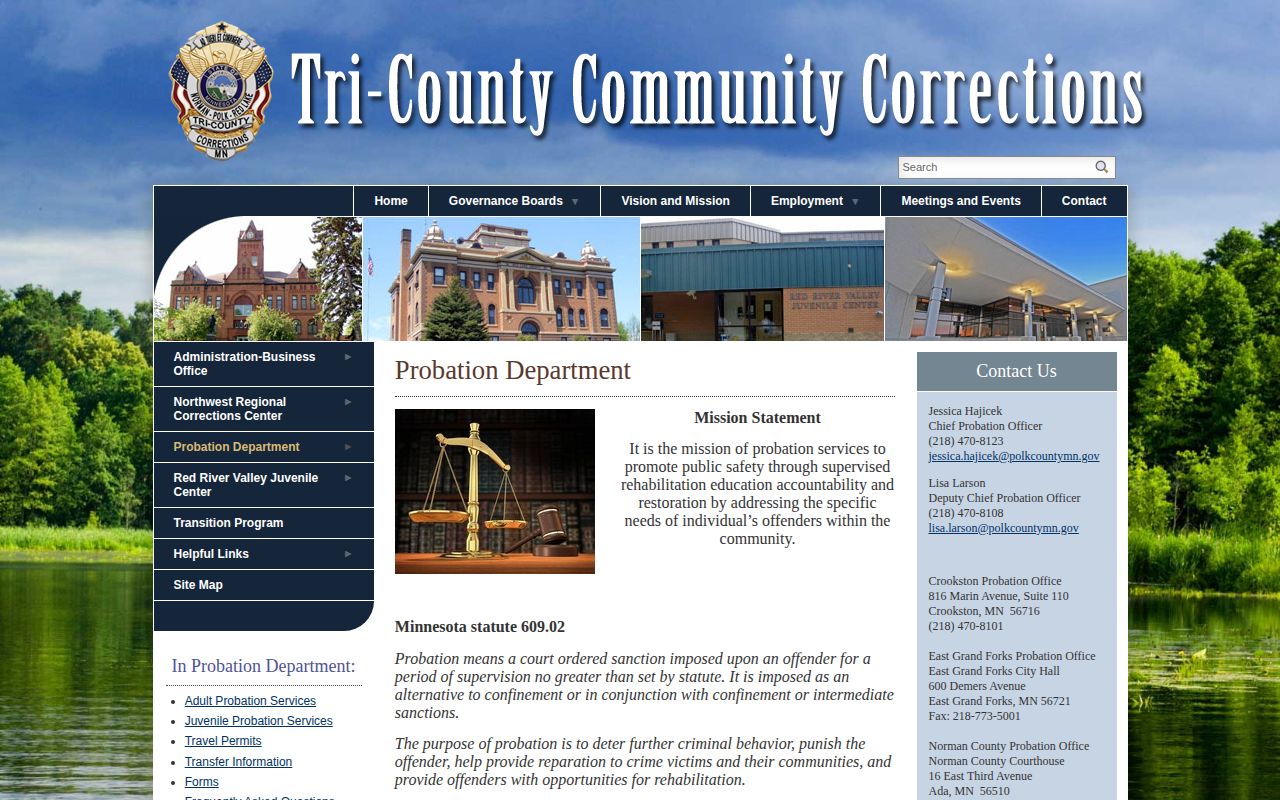 The capture places the juvenile facility within TCCC without converting it into an adult public-record search.
Red River Valley Juvenile Center and NWRCC share a regional corrections connection, but their records do not merge. The adult jail holds adult detainees and publishes a current roster. The juvenile center serves young people under a separate legal and case-management structure. A facility map can list both so readers choose the right office, yet it cannot imply equal public access or invite disclosure of juvenile information.
Juvenile Records Are Not Adult
Adult terms such as roster, booking photo, release list, and offender search describe tools used in some adult systems. They do not grant access to juvenile data. A name resembling an adult record must never be joined to a juvenile matter without official proof and legal authority. Similar names and family ties are not enough.
MNDOC’s locator covers adults committed to the Commissioner who remain under its jurisdiction. The limited Supervised Release Board may address certain state sentences for offenses committed as juveniles, but that is a specialized path and not a Red River Valley Juvenile Center roster. No assigned research supports using board materials to identify a child at this facility.
Note: A protected or absent juvenile record cannot show that custody ended, continued, or never occurred.
Juvenile Release Court Route
The court may hold the legal order behind placement or release, while the facility holds operational custody information. Those roles resemble the adult distinction between a court order and jail timestamp, but access rules differ sharply. An authorized party should ask the juvenile court how to obtain an eligible order and whether remote access is permitted. Public MCRO results do not replace restricted court access.
If counsel represents the young person, counsel is the sound route for interpreting an order and confirming placement. Parents or guardians should use official contact details supplied in the case. Others should not press staff for private facts. No public release time, destination list, or archive was found, so none should be guessed from social posts or adult custody pages.
Handle Juvenile Release Data Safely
Keep any lawfully received juvenile information within its authorized context. Do not repost a name, photograph, birth date, facility status, release date, or destination. Private identifiers used to establish identity should remain private. A denial or redaction belongs with the court, counsel, or agency review process rather than public speculation.
Red Lake County’s adult route remains clear: adult detainees go to NWRCC, not the juvenile center. This facility entry marks that boundary and prevents a wrong adult search. It does not create a juvenile search service. When age or custody type is unclear, confirm the responsible agency without disclosing a suspected juvenile identity, then follow the lawful channel it provides.
Protect Juvenile Release Records
Juvenile case privacy shapes both access and language. A caller should not ask an adult jail employee to confirm a suspected juvenile identity, and an online poster should not crowdsource a child’s date of birth, photograph, or destination. Begin with the known court, facility contact, attorney, parent, guardian, or case worker. Let that official channel determine whether the requester is entitled to any information.
A narrow request also reduces risk. An authorized person may need to know whether a court-ordered move occurred, where required reporting will take place, or which office holds an eligible order. That does not require a public roster or broad institutional file. The center may disclose only what law and case authority allow. Redaction or refusal can reflect a valid privacy rule rather than poor recordkeeping.
The adult NWRCC roster should never be used as a comparison archive for the juvenile center. Its visible fields concern current adult jail entries and do not establish any juvenile fact. Minnesota VINE likewise belongs to participating county detention events within its coverage, while MNDOC’s locator is limited to adults committed to the Commissioner who remain under state jurisdiction. None becomes a juvenile release tool by default.
Juvenile release can also be the wrong term for a placement change. A young person may move under a court or agency plan without the public being entitled to a destination or legal detail. Only the authorized official record can describe the event. Avoid translating silence into freedom, custody, guilt, danger, or any other claim.
When a lawful record is received, preserve its date and source. Share it only with people authorized in the case. If the information appears wrong, use counsel, the court, or the facility’s correction process. Public reposting can spread an error and defeat the protections that apply to juvenile matters.
The Red River Valley Juvenile Center entry therefore has a limited purpose: identify the official facility, supply its contact, and block an improper adult search path. It does not invite names or tips. It does not publish a release feed. It directs case-specific questions to the offices that can lawfully answer them.